If you follow me on Facebook or Instagram, you’re probably aware that the other half and I have started re-acting life during the late 18th century, and the American War of Independence (1775 to 1783) in particular. We joined the 6th Virginia Regiment, a group portraying patriot militia – not very fashionable this side of the Atlantic, but those dashing redcoats need someone to fight.
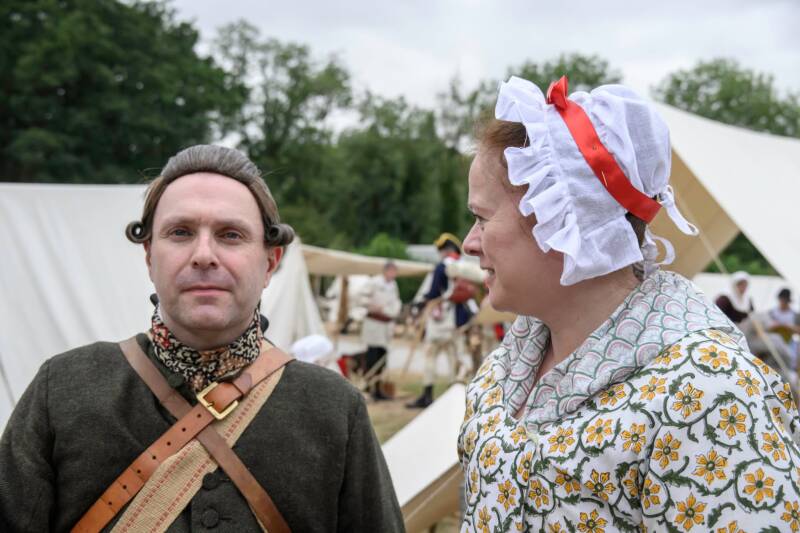
Image courtesy of Paul Burton
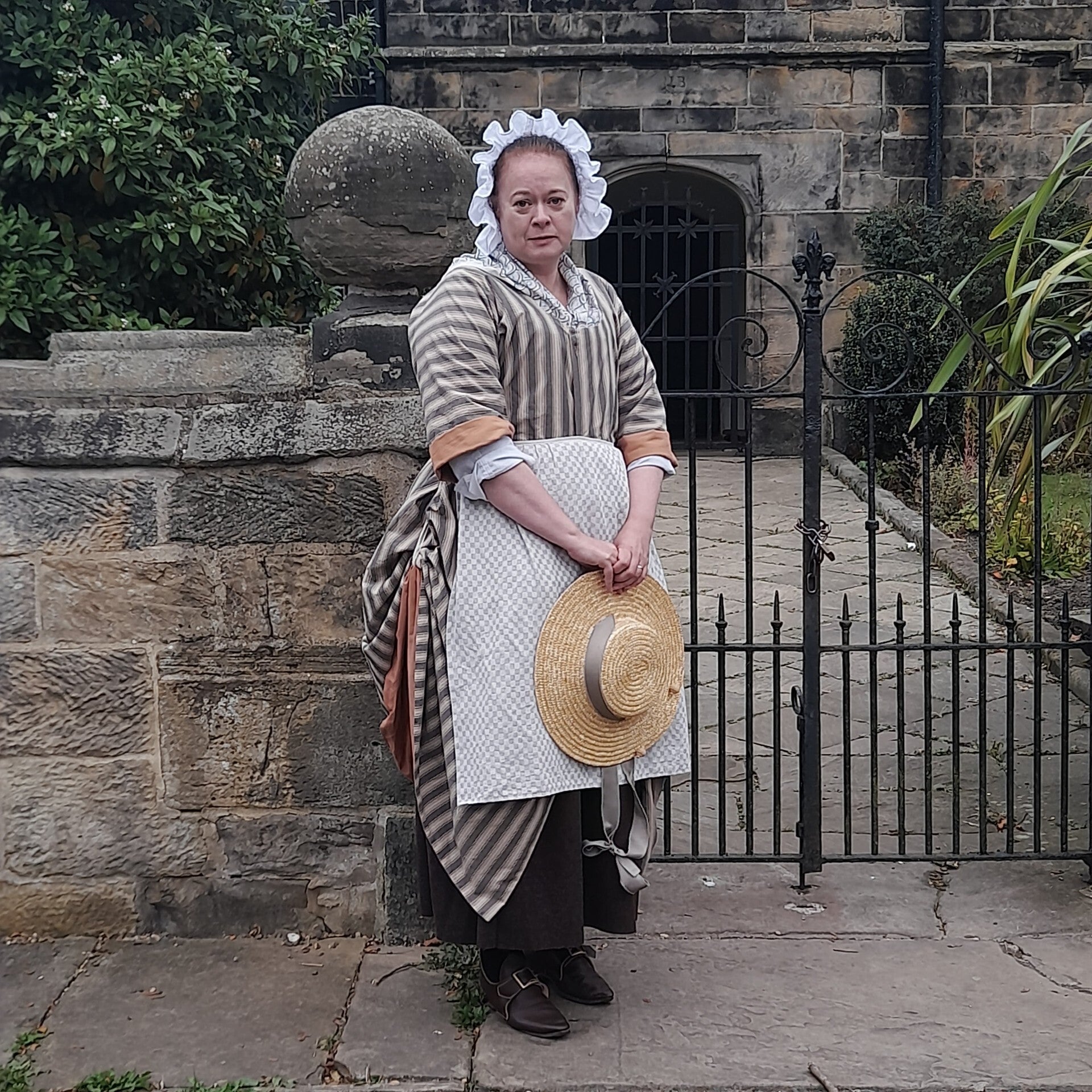
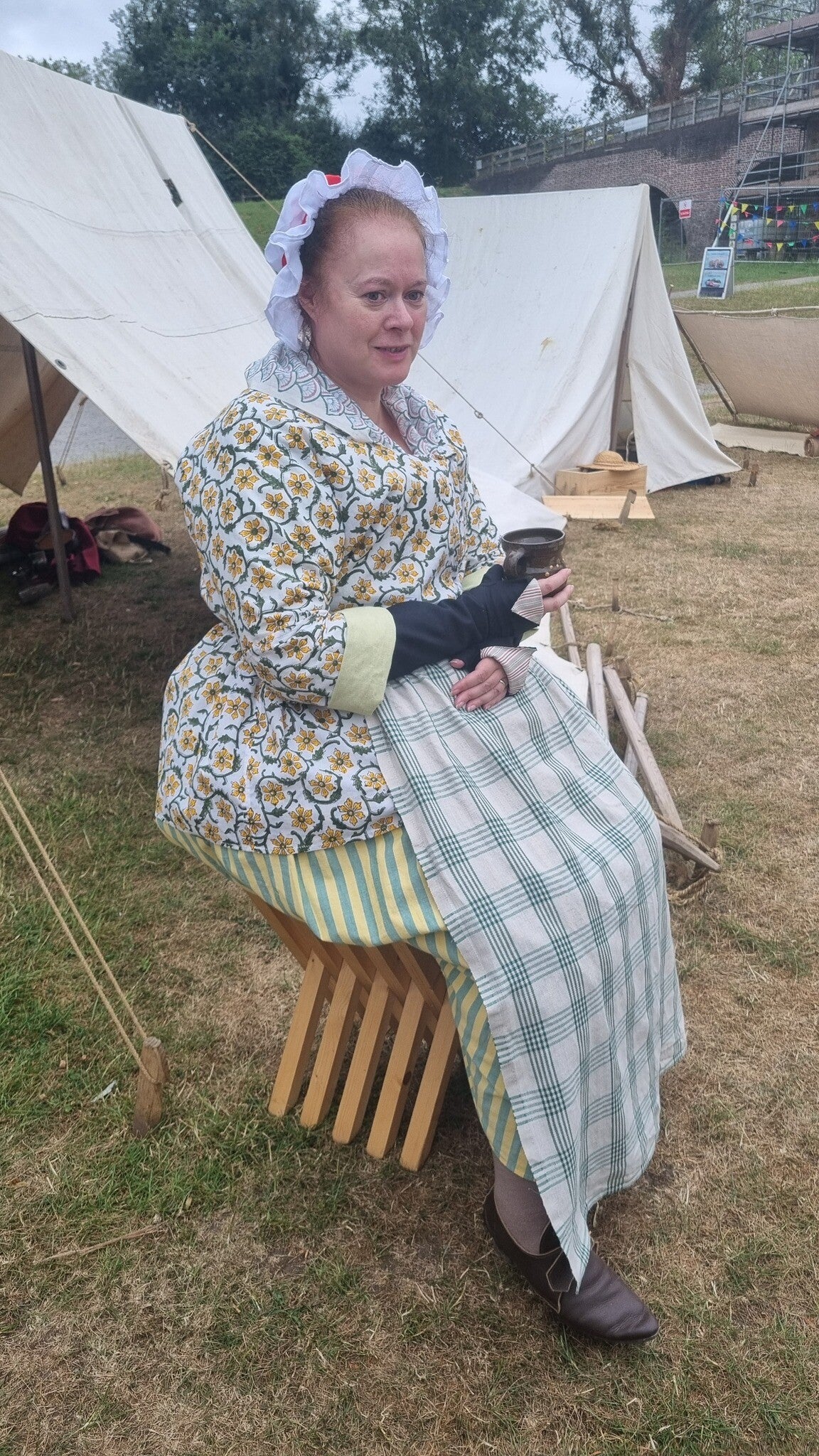
Stripes!
When we returned up North after living down in Somerset for a few years, and once Covid was out the way, we looked forward to re-enacting again. One of our friends who we’d met through our time in the Sealed Knot Society (English Civil War re-enactment) had joined the 6th, and Pete was desperate to give it ago. I wasn’t so sure, as I’m just not that interested in the clothes from that era (shallow, I know). But the thought of getting to wear stripes and bright printed cottons tempted me to get involved.
Unlike the 17th Century, I have no desire to portray a lady of fashion and wealth, which wouldn’t be appropriate on the military camp at the sort of events we’d be involved in. I’m happy to just be an ordinary soldier’s wife.
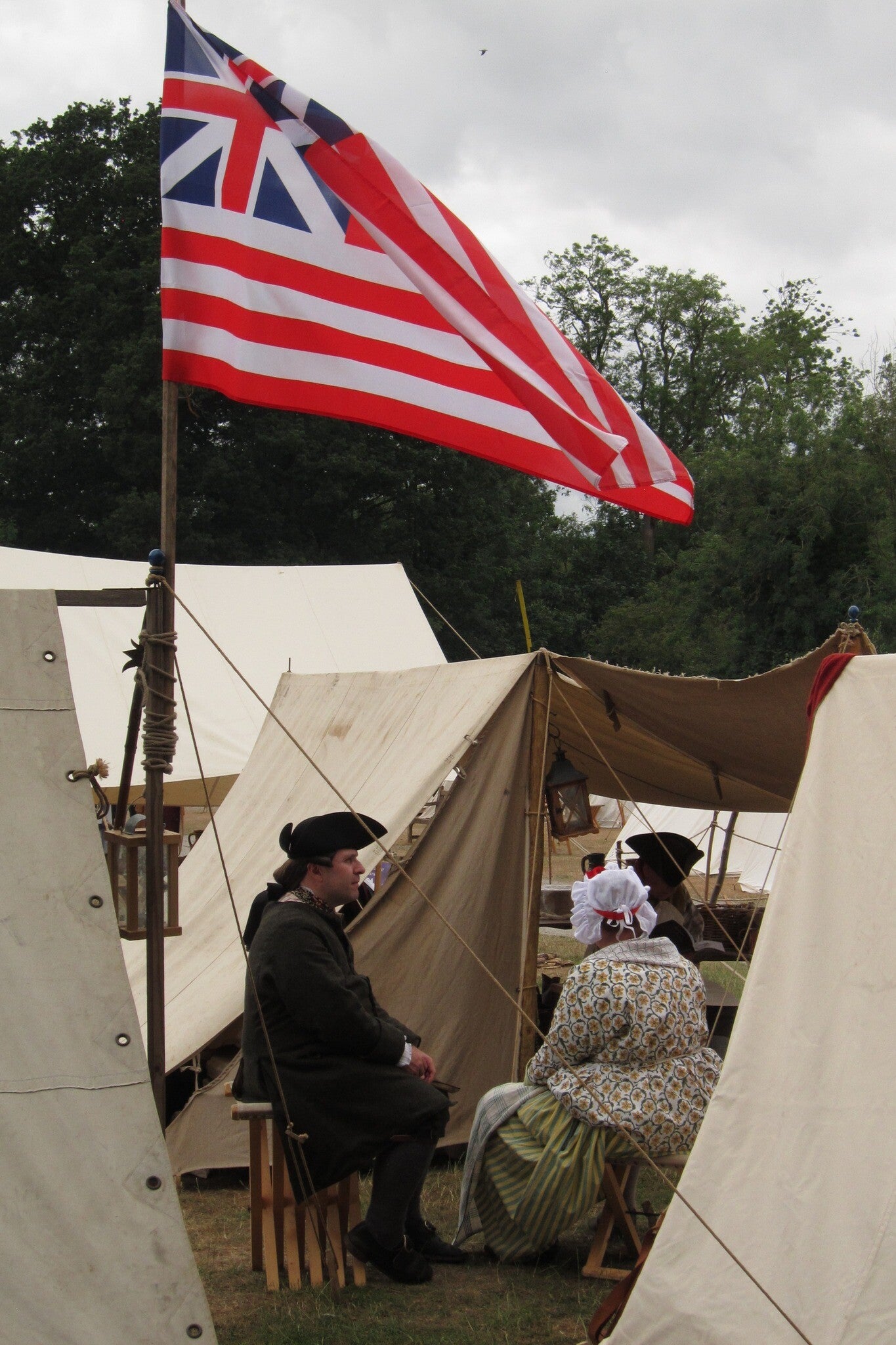
Photo courtesy of Paul Burton
What to wear 1770s style
It’s widely acknowledged that ordinary working women during the 18th Century wore what was known as a bedgown or short gown with a petticoat and an apron. Bedgowns were informal jacket type garments, originally worn by ladies of fashion in the morning when they first got up. They were of simple construction, and easy to wear, requiring no assistance by maids to put on. They made the most economical use of the fabric. No wonder they were soon being worn by the ‘common sort’ of women as their everyday attire.
There is a pattern for one such bedgown in Garsault’s ‘L’art du Tailleur’ from the 1760’s. The pattern looks a little odd, and of course, the accompanying instructions are in 18th Century French. But La Couturiere Pairsienne (actually German) has written a ‘how to’ article about making a nightgown – also known as a ‘Manteau de lit’- using these instructions, helpfully translating the French into English as well.
There’s an extant garment described as a short gown in the Colonial Williamsburg collection (Costume Close Up – Clothing, Construction and Pattern 1750 to 1790). Are bedgowns and short gowns the same thing? Possibly. If they do differ, it appears to be in the cut of the neckline (short gowns are more shaped - square or rounded), and short gowns have flared skirts, bed gowns are pleated over the hips.
18th Century petticoats are straightforward. They use two widths of fabric sewn up the sides and then the waist is pleated onto tape. This is almost identical to how I make my 17th Century petticoats, the only difference being the 18th Century preferred knife pleats to cartridge pleating. And using a striped fabric (very late 18th Century) means your pleats will be even and no need to measure. The back and front of the waist are sewn to individual tapes, which tie separately, giving the maximum amount of adjustment, and access through the resulting gaps to pockets securely worn underneath.
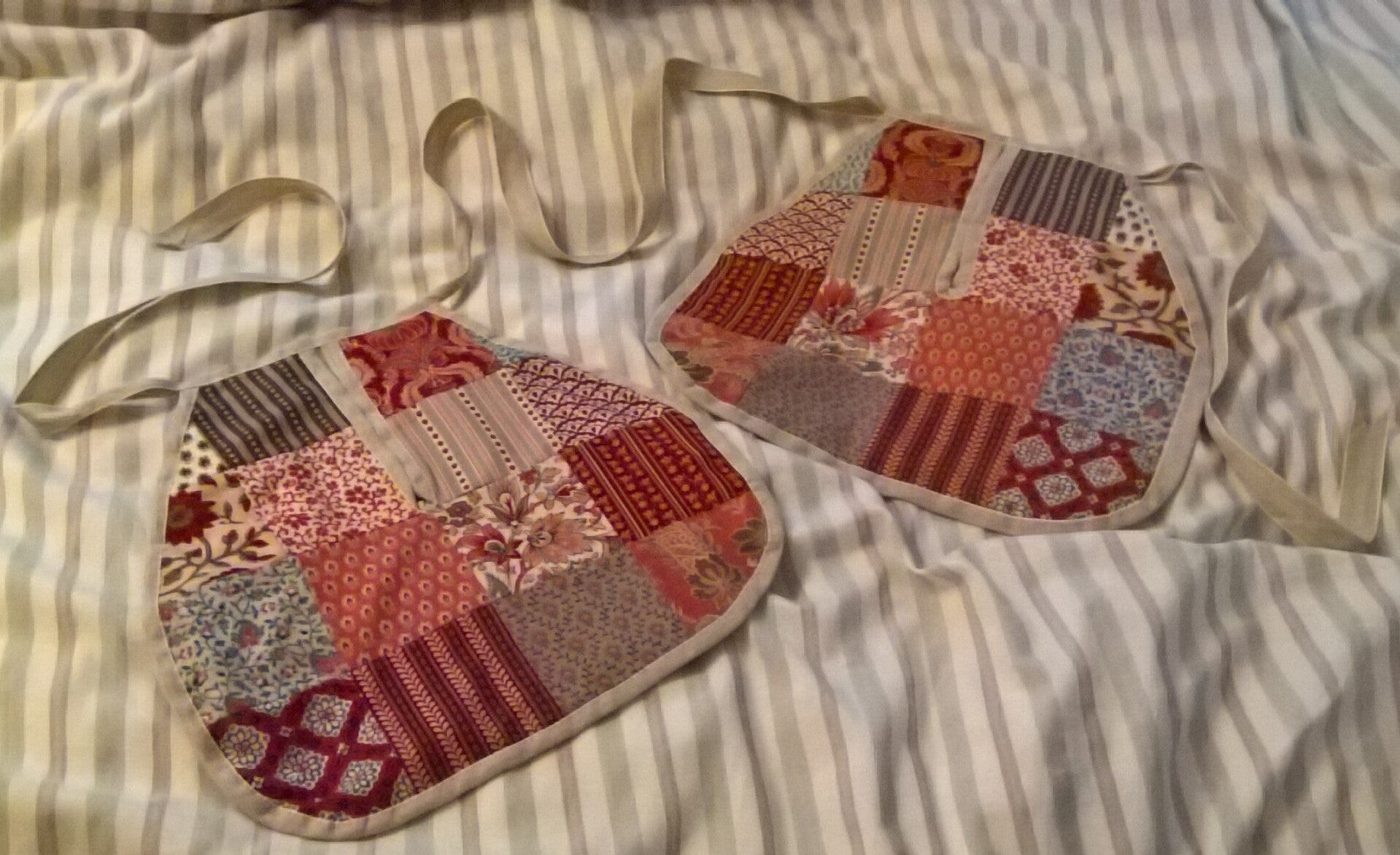
My patchwork pockets - I love them!
Separate pockets were essential for every woman during the 18th Century – and possibly before and after. These were tied around the waist securely underneath the outer skirt/petticoat. Pockets could be either single or in pairs. As I’m known to enjoy some patchworking on occasion, I had plenty of small pieces of suitable cotton fabric to make a patchwork pair of pockets. My favourite quilting fabric designer is French General, who’s inspired by anything vintage French, including wallpapers and textiles from old chateaux, and I had several fabrics in my stash which would pass as 18th Century. My pockets are probably my favourite thing I’ve made. Although no one else sees them, they bring me joy when I wear them – they are so colourful and cheerful. And so practical – I can fit two mobile phones, tissues, lip balm, house and car keys, husband’s wallet and other essential ladies’ bits into them and carry around all day resting on my hips. How did I ever manage without them.
A typical working class woman/camp follower of the 1770s
Photo courtesy of John Conyard
Other essential accessories are an apron, handkerchief worn around the neck, shoulders and chest and some form of headwear. Everyone would have worn a white linen cap with a frill and possibly a ribbon, to keep their hair clean and tidy, along with a hat when out of doors. The flat, wide brimmed straw ‘Leghorn’ hat is iconic, but fabric bonnets with puffy crowns and a sun shading brim were becoming very popular, usually in black but other colours were also seen. Not a necessity but nice to have are elbow length fingerless mitts, turned back at the knuckle to display a contrasting facing.
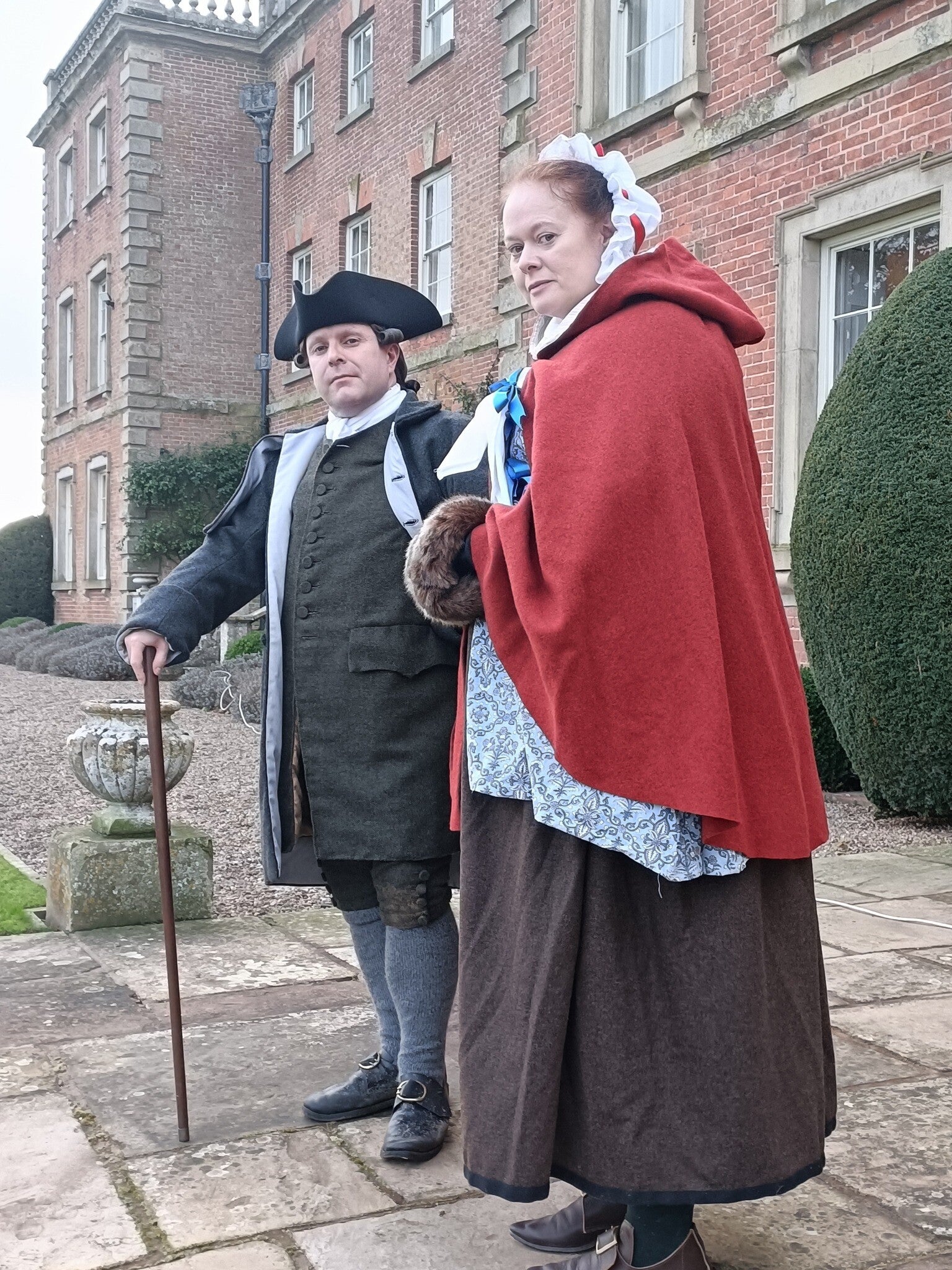
Cloaks were very much in evidence, for all classes of women. Red cloaks were popular and could have large attached hoods, possibly lined in a contrasting fabric - origins of 'Little Red Riding Hood' perhaps? Again, these are not an essential item of kit, but are handy for wet and cold weather, or hanging out around the camp fire in the evenings. But a trusty blanket wrapped round the shoulders is just as effective - and historically accurate as well.
Add comment
Comments