‘The best impressions aren’t built overnight. They’re built over time by listening, observing, and being willing to keep learning.
Something that was instilled in me growing up is that we’re interpreting real people. These were real families, real struggles, real lives. That carries weight. We aren’t just putting on clothing. We’re representing people who actually lived through this history.’ –
Chelsey B, American War of Independence re-enactor
Being a re-enactor is about more than just wearing historical fashions. How can you make sure you look and behave like a real person from the past and not just someone wearing a costume.
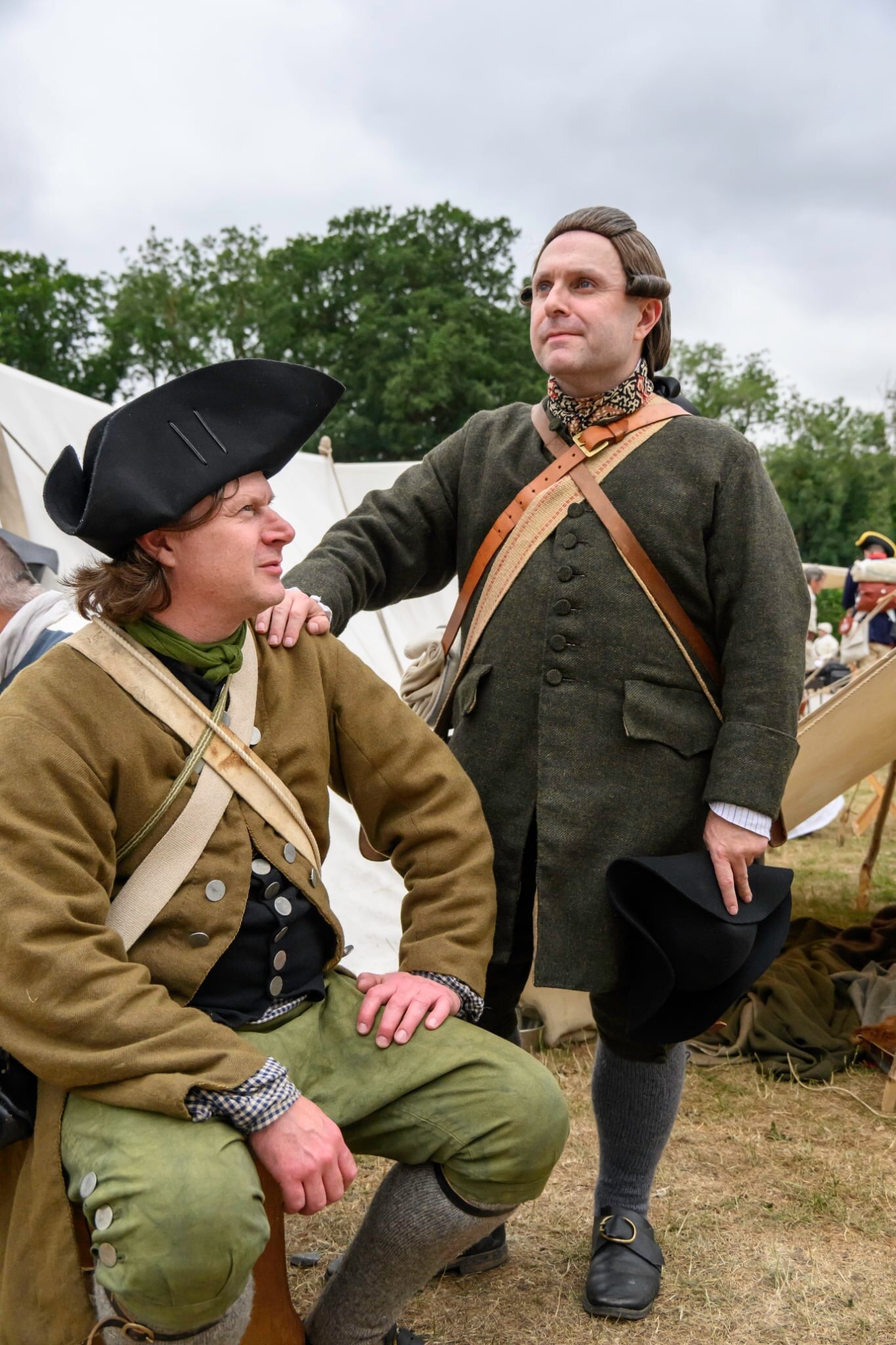
Re-enactors from the 6th Virginia Regiment portraying two 18th Century patriots from the time of the American War of Independence
Photo courtesy of Paul Burton
Know who you are
It’s a good idea to know what type of person you are aiming to recreate – status, profession etc. This will then inform all your decisions regarding clothing, accessories and props. You don’t need to have a detailed back story, or demonstrate this dramatically – ie first person interpretation. If you want to do this then great, you can have fun with this, just make sure your persona is realistic and believable.
Try to put yourself in the mind set of your persona/impression. See the world through their eyes and endeavour to make sense of things as they would have done.
Before the advent of reasonably priced, mass produced fashion and high street chain stores, you would have been able to tell a lot about a person by the clothes they wore and the way they presented themselves. Age, social status, even whether you lived in the country or urban centre would all be demonstrated through the garments someone wore.
Things to consider –
- Age – younger people are frequently more likely to adopt new fashions, and older people tend to be more conservative in their dress, perhaps clinging to beloved fashions from their youth.
- Social status/wealth – keeping up with fashion cost money, and staying on trend often involved luxury, expensive fabrics and accessories. Certain colours were also more costly to produce than others. Deep black was expensive to achieve (using imported dyes or being overdyed several times to build up the colour) and therefore a sign of status for wealthier individuals or possibly kept for Sunday best. Certain shades of blue and red were cheaper and used for women’s petticoats and servants’ coats. Cheaper still was ‘sheep’s colour’ – the undyed colour of the fleece, natural shades of off white, grey and brown.
- Profession/Occupation – several professions and occupations might have specific garments associated with them – the law, clergy, even protective clothing for messy jobs – aprons etc. Men often wore leather breeches as these were hard wearing and more practical for some tasks (they would not have been considered sexy like modern leather trousers).
- Geographical location – in an age before mass media and reliable speedy travel, new ideas took time to filter through the country. Therefore, the nearer you lived to London the more well informed – and fashionable - you were likely to be. Even in the provinces, urban dwellers would be more stylish than their neighbours living in the surrounding countryside. Townsfolk had better access to news (of all sorts) and the means of acquiring fashionable clothing – tailors, haberdashers, second hand clothes dealers etc
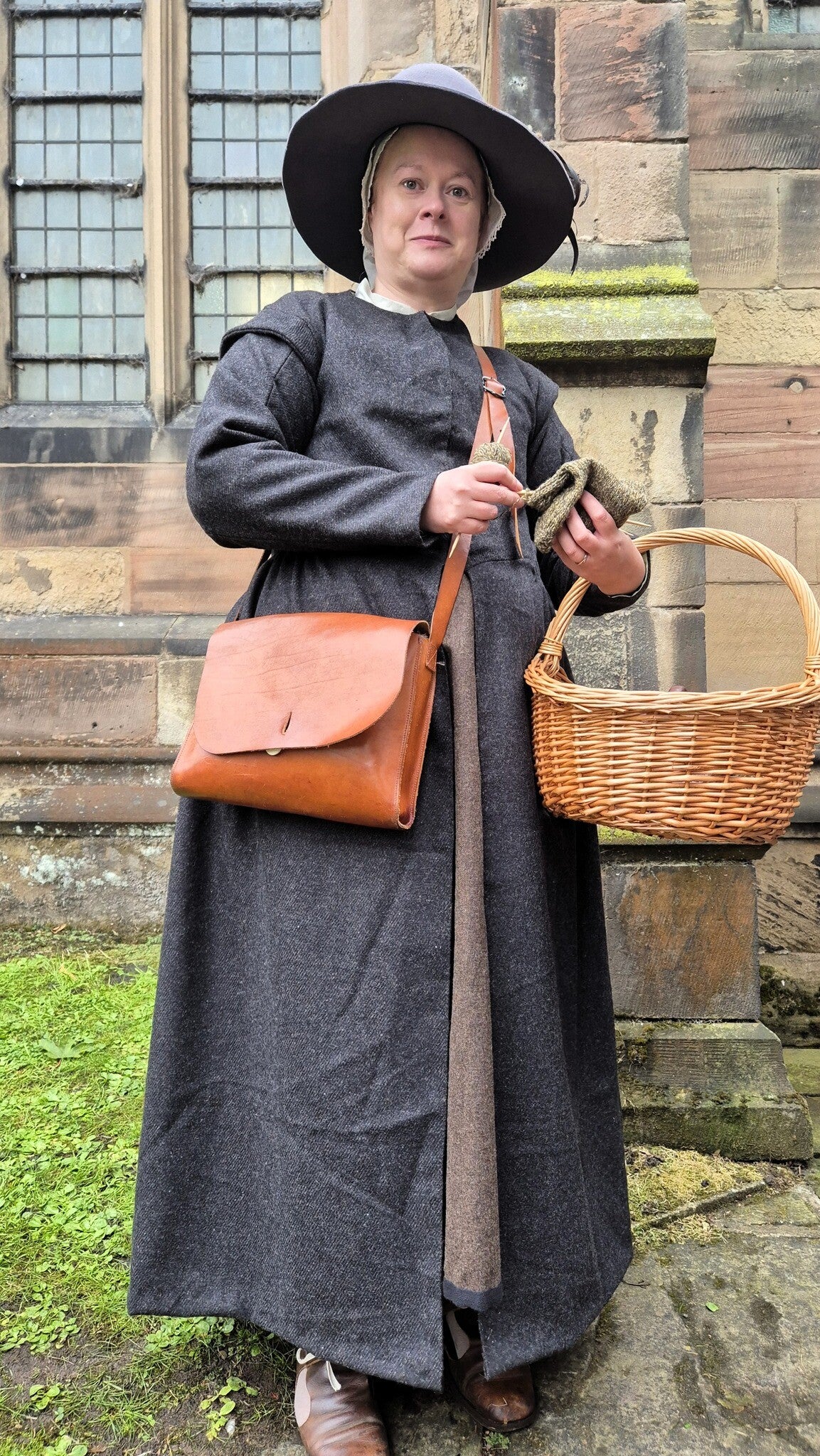
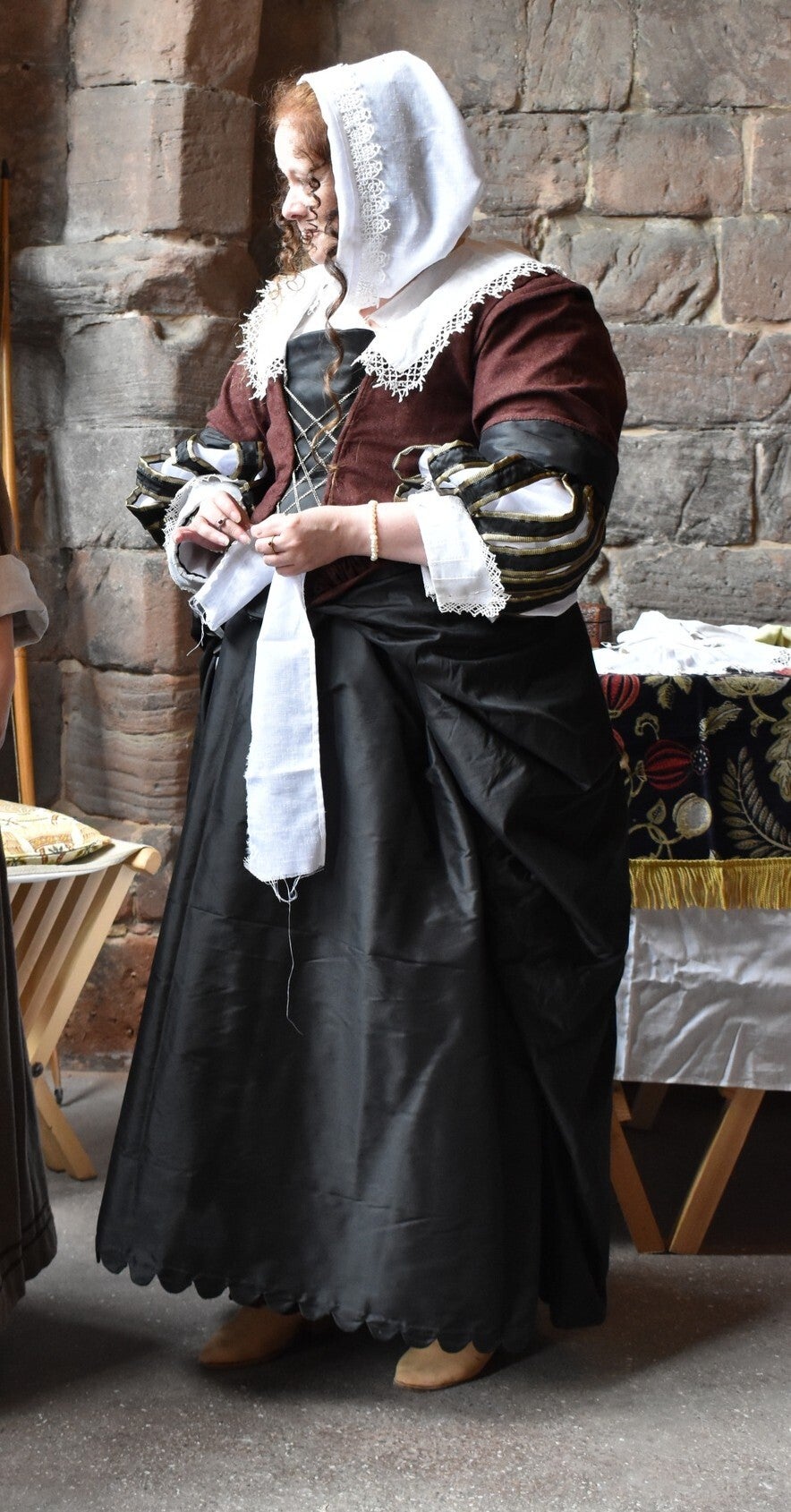
Two images of the same re-enactor portraying two women from the 1640s. On the left is a typical 'goodwife' from the lower orders of society, and on the right a gentlewoman of much higher status.
Photos courtesy of Rod Bell (left) and Henry Gage/English Heritage (right)
Clothes, not costume
Aim to wear the right clothing for your chosen historical period, in the right combination. Historical clothing usually involved several different layers, and separate items were often attached to each other in various ways, such as collars and cuffs, which were often separate from shirts and smocks. Don’t take short cuts with your historical clothing, as this will just end up looking like you are wearing fancy dress costume.
Find out about all the clothing which would make up an outfit and aim to acquire and wear these. Get used to wearing your period clothing, moving in them and managing them to do everyday activities. Try to understand why the clothes were worn in the way they were. Sometimes, just wearing them for a length of time will help you make sense of this.
Start with the right underwear. Foundation garments for women are key in recreating the correct historical silhouette and could affect the way you hold yourself and move about. Your period clothing will look so much better for wearing them. But also be aware of time periods when underwear wasn’t worn. If you recreate life before the 16th Century, modern bras can give the wrong shape to the body and the way the outer garments drape over it.
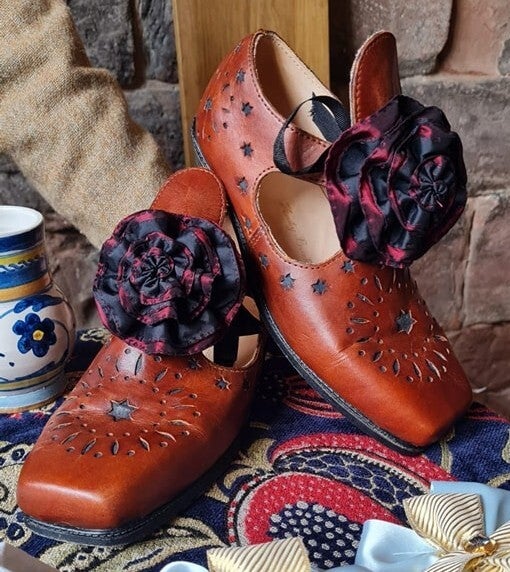
Correct footwear is also important and might change the way you walk.
Right - a recreated pair of mid 17th Century 'latchet' shoes, based on a pair from the collection at the Bata Museum in Toronto, Canada
Photo courtesy of Ginny Slade
Study period images. Try to understand the different layers of clothing being worn. Also note the way the person/people hold themselves and the postures they adopt. For example, it was manly to stand with your hands on your hips, but unladylike for a woman to do this. Hands were more likely to be clasped lightly at waist height/over the belly.
Was there any etiquette regarding the clothing – such as ‘hat honour’? Try to incorporate this into your impression and conduct during interpretation.
Hair and make up
It doesn’t matter how historically accurate your clothing is, or how well you wear it, if your hair isn’t right you will just look wrong. This is the biggest issue I see when looking at other re-enactors.
This is probably more of an issue for women. Before the 1920s, female hair was universally very long, but always worn dressed up, certainly for adult women. However, for most of history adult women also kept their hair covered – at least partially. This should give those of you with less than perfectly accurate hair a ‘get out of jail free’ card.
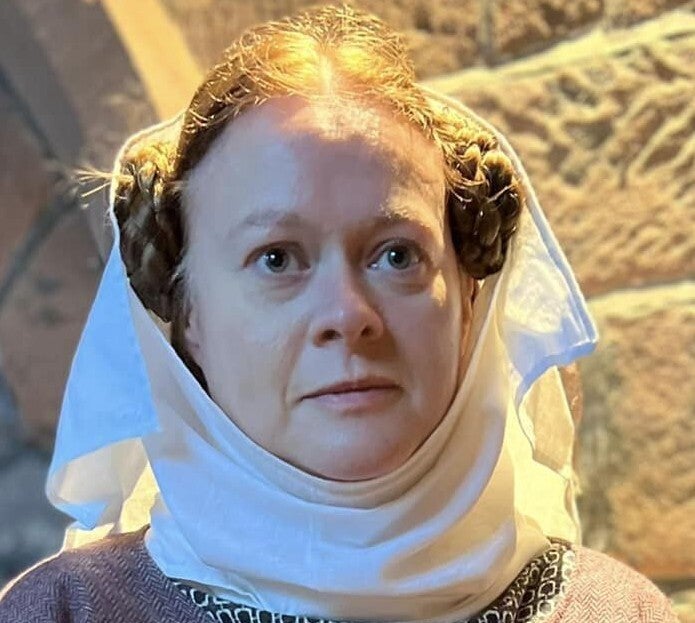
Linen wimple and veil - fashionable during the early 14th Century
Photo courtesy of Gary Ashby
Three photos of the same re-enactor, showing head coverings fashionable during different periods of history
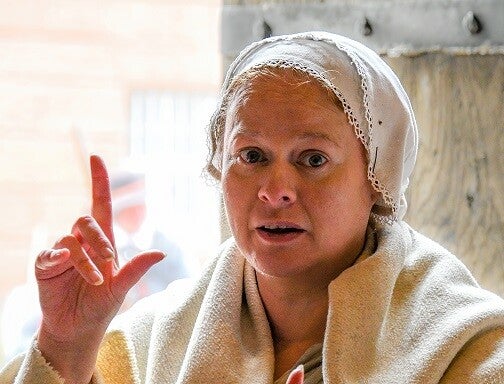
Linen coif and cross cloth, both trimmed with bobbin lace - fashionable during the late 16th/17th Centuries
Photo courtesy of Kevin Dowey
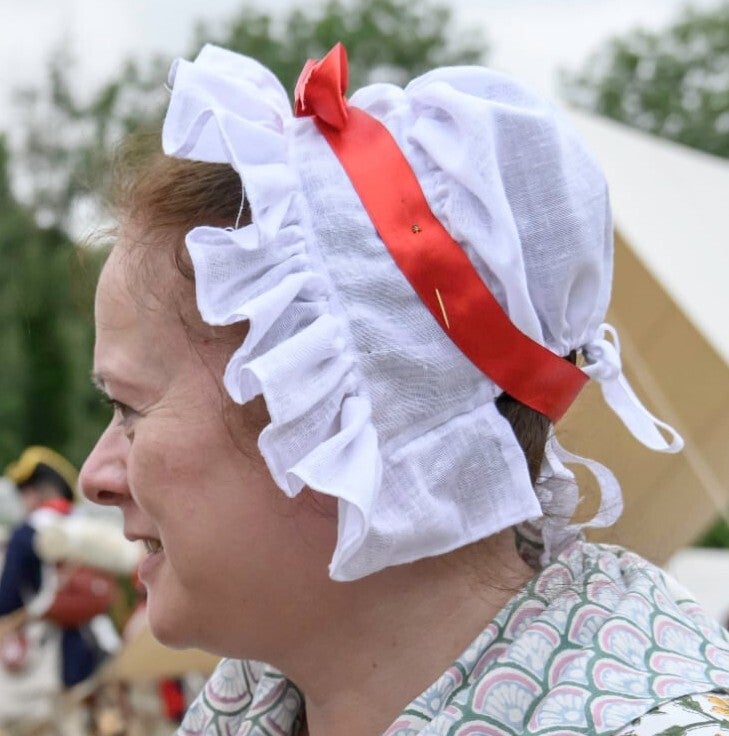
Frilled linen cap - fashionable during the 18th Century
Photo courtesy of Paul Burton
One of my biggest bugbears are fringes. These just weren’t a thing (the exception being the 1620s/30s and late 19th Century) and look completely out of place for most historical periods. If the front of the hair was visible, it would be parted in the centre or taken back from the forehead. Side partings were also not worn (unless you're recreating a high status person from mid-17th Century Spain or Portugal) and should be avoided.
Another thing that wouldn’t have been seen was any hair hanging down underneath the headdress/cap – of any length. As mentioned above, most women had very long hair (waist length and frequently longer). The proximity to open fires made tying/pinning long hair up a necessity. One of the purposes of head coverings was to keep hair clean and tidy - and out the way.
Men may have issues with facial hair – which has gone in and out of fashion over the decades and centuries. A medieval beard could be very different to one from the mid-17th Century, and both these might differ from whiskers from the 1800s. The 18th Century was almost completely devoid of beards.


Three photos of the same re-enactor, showing facial hair fashionable during different historical periods
Left - medieval beard
Middle - 18th Century clean shaven
Right - early 20th Century moustache
Photos courtesy of Paul Burton
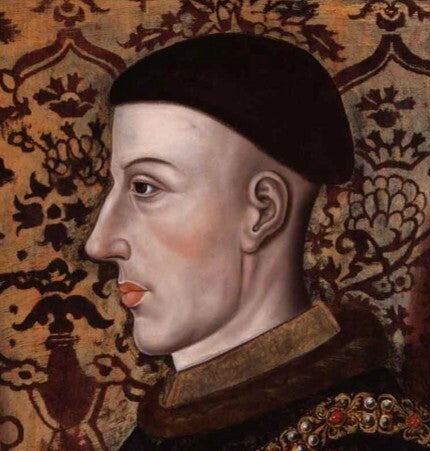
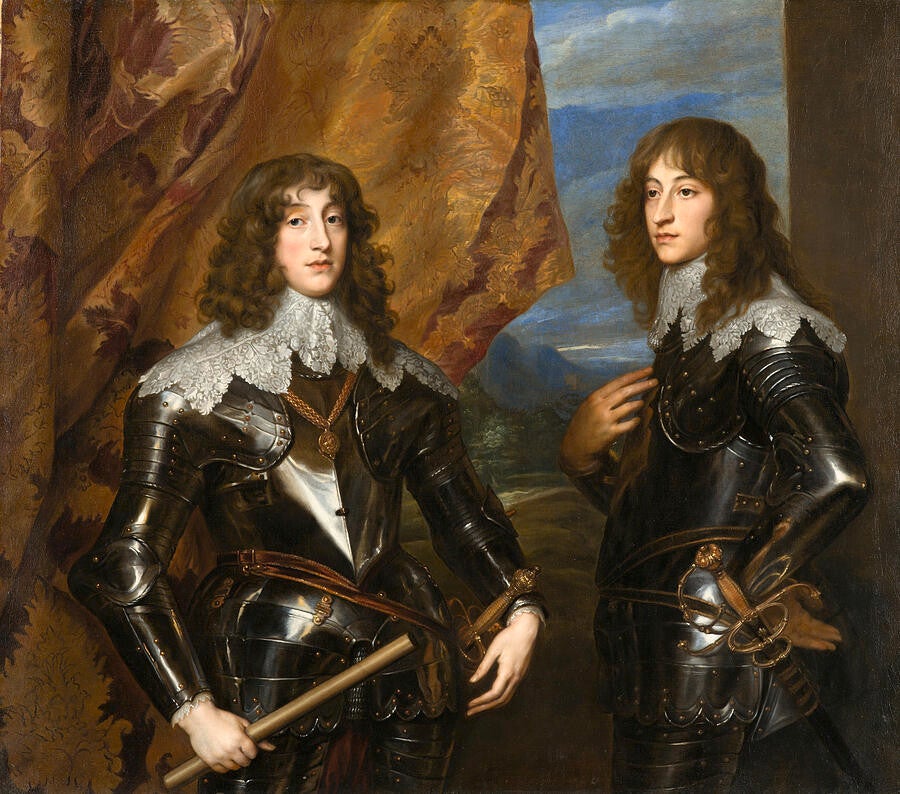
Long hair was also fashionable for men during several historical periods, but rarely have I seen period illustrations where men wear their hair fastened back in ponytails or ‘man buns’. The exception, of course, being the mid and late 18th Century. Long male hair would have been styled, at least by the upper classes. Medieval kings often wore their hair curled, with rolls of hair resting on their shoulders, and during the mid-17th Century, hair was frequently layered and arranged like a Farah Fawcett ‘do’ from the 1970s, or a more modern butterfly cut. As we all know, men can be just as vain as women.
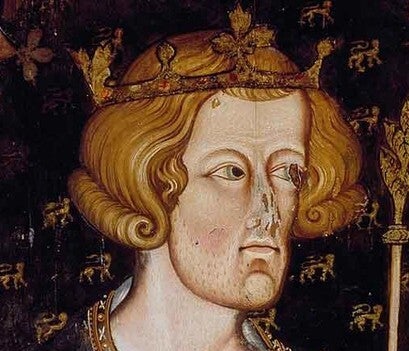
Left - King Edward I (1239 - 1307)
Right - King Henry V (1386 - 1422)
Below -
Princes Charles Louis and Rupert (nephews of Charles I) 1630s
For most of history women didn’t wear any makeup either. Some subtle cosmetics might be acceptable, but please leave false eyelashes, fake tan, and contouring kits in the makeup bag. Eyebrow shapes have also changed over time. If portraying a woman who might have worn make up, please remember that the fashionable complexion was pale until after the 1920s. Although lip stain and rouge (blusher) were both used, next to no eye makeup was seen until the 20th Century.
Nails would also have been short and bare. Most ordinary women would not have had time to shape their nails, or maintain a manicure if they did. So, remove any nail vanish for a few days – you can always paint your talons again come Monday morning.
A note about tattoos. These have gained in popularity and acceptance over the last thirty years. But ‘ink’ really wasn’t seen as decent or respectable before this date, especially for women. So, remember to cover your tatts, choose long sleeves or high necklines if needs be.
Jewellery
Most people during the past couldn’t afford jewellery, or performed manual work which made certain types of jewellery impractical. Even wedding bands weren’t common for the working classes until the 20th Century.
Although fashionable for women who could afford it during the Roman occupation of Britannia, earrings were not worn again until the late 16th Century (by both men and women), and then only by the fashionable upper classes. Despite a 16th Century portrait of Maria of Portugal, Duchess of Parma, showing five gold earrings worn in one ear, multiple ear jewellery was not seen until the 1980s. Before then, it was the norm to wear just a pair of earrings, with one piece of jewellery in each earlobe (men could wear a single earring during the late 16th and early/mid-17th Century only). Facial jewellery was another thing not seen until the late 20th Century.
So, take your earrings out (your holes won’t heal up if you take them out for a day or two), along with nose studs and lip rings (and whatever else you decorate your face with).
Finger rings would have been barely seen either, especially worn by lower status people. However, context is everything. Elite members of society, who took part in little manual work, might have worn several rings, including on the thumbs and lower parts of the fingers – between the knuckles. Although I’d never expect anyone to take off a wedding ring, especially if it’s a plain gold band, is it too much effort to remove other rings, just for the duration of a living history event?
If you partake in the rough and tumble of re-created historical warfare, jewellery – of all descriptions – could be a health and safety issue, for you and other people. Remember how your PE teacher used to make you take all your jewellery off at school for the same reason.
Attention to detail
All of the above comes down to making that extra effort. So, let’s get rid of the ‘that’ll do’ and ‘it looks OK from a distance if you squint’ attitude. This will show in the historical presentation. And it usually costs as much to do things wrong as it does to get them right.
Make sure any personal accessories are present and appropriate. Elite representations will require numerous accessories, made from the finest materials. But a common soldier (or his wife) will need fewer, and these will be roughly made, old and/or showing signs of wear.
If in doubt about whether a particular item is suitable, get a second opinion from someone you trust – a commanding officer or goodwife, or an experienced re-enactor who you think gets things right.
And if you do decide to cover offending items for re-enactment, make sure they stay covered. I’ve recently seen a photo of a re-enactor from Europe whose overall impression was very good. I have minor quibbles about too much cleavage on display, correctly taped hair not being covered and would a woman who could afford to wear pearl earrings and necklace be present on an army camp? But the major blunder was the large smart watch worn on the wrist. I’m assuming the person in question thought that this was covered by their long-sleeved smock! Would it have been too much effort to take this off and kept discreetly hidden in a pouch?
Correct personal interactions
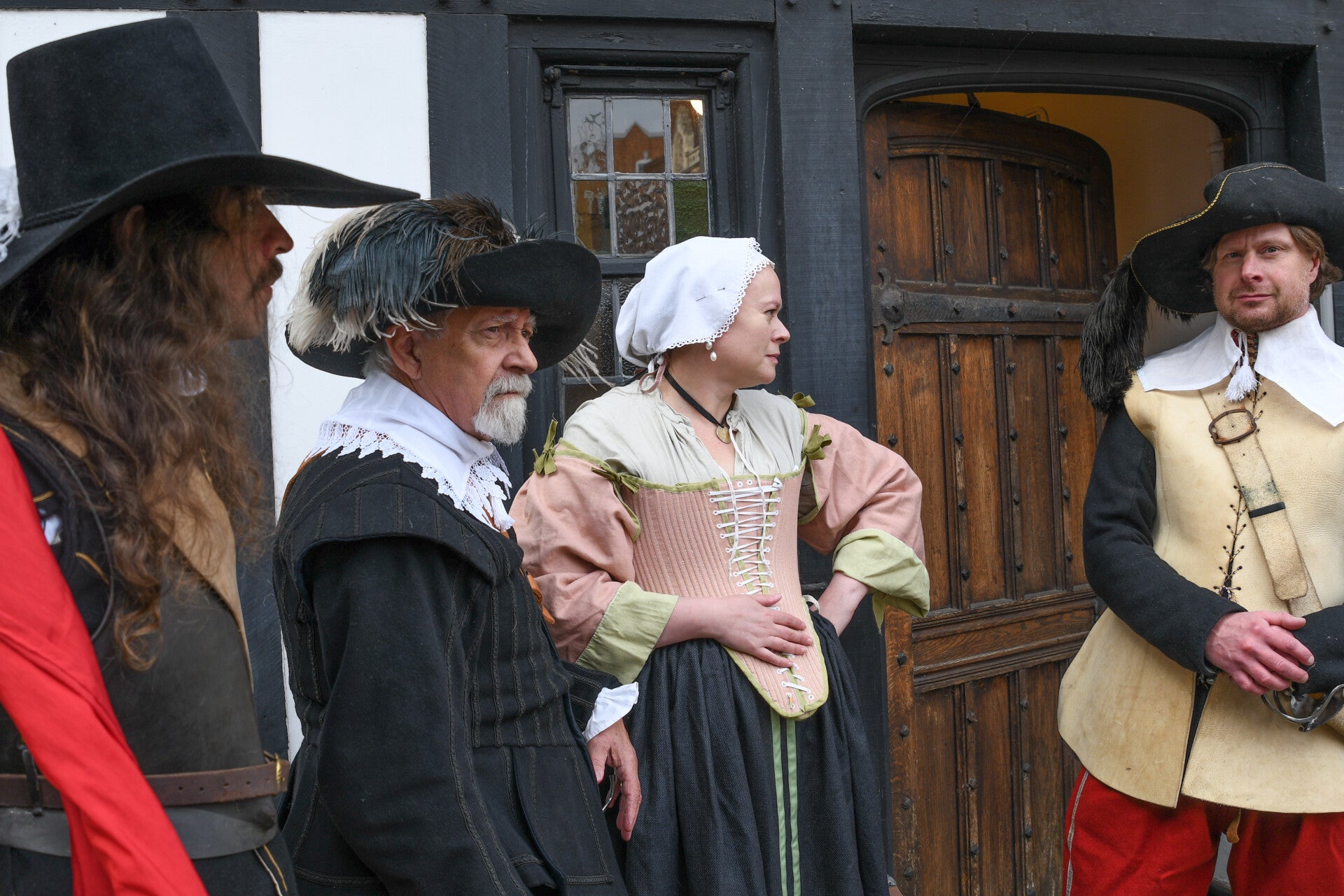
A group scene from the mid 17th Century
Photo courtesy of Kevin Dowey
Moving away from the purely sartorial, can we improve our overall interpretation of our chosen historic period? Can we include manners and etiquette when interacting with our fellow re-enactors? Do we greet and address each other in an accurate way? Do we demonstrate the social hierarchy and how different social classes would have mixed with each other? Can we sprinkle our discussions with a few period terms – referring to the privy instead of the toilet or loo, or making sure we eat dinner at mid day and not lunch etc? I think these small things can add greatly to the feeling of immersion – for both re-enactors and the public.
Never become complacent
Once you’ve been re-enacting for some time, and you’ve made an effort to be as historically accurate as you think you can be for your chosen impression, it could be easy to become smug. And let's be honest - we've all made mistakes.
But we should never accept that we are the best we can be. Look at yourself honestly in kit. Again, is there someone who’s opinion you trust you could ask for evaluation? There is always something that can be improved. Are we up to date with the latest research? Is there anyone out there doing things better than us? Is there some piece of ‘kit’ we could work towards acquiring to become even better? And no one expects you to do this overnight. Good historical kit costs money, and if you are making things yourself this takes patience. Most re-enactors will also have full time day jobs and other personal commitments as well. After a quarter of a century recreating life during the mid-17th Century (and a few other periods as well), I still have a long ‘to do’ list.
Add comment
Comments
Great explanation of really what re enactment means. Thank you